
What is car remapping and is it legal? The advantages and disadvantages of car remapping
Car remapping, commonly known as ‘chipping,’ has become increasingly popular among drivers who value high performance.
The method modifies a car’s Electronic Control Unit (ECU) in order to control its acceleration rate.
Car manufacturers frequently impose restrictions on vehicles as part of their factory settings. This is overwritten by remapping.
Is it, however, secure? Is it permissible to remap a car? Is it going to nullify your insurance or affect your resale value? The benefits and drawbacks of remapping a car, as well as the immediate and long-term expenditures, are discussed here.
What is car remapping?

Car remapping, as previously said, is a procedure that modifies the operation of a vehicle’s ECU.
The ECU regulates the engine’s power and can be used to limit how much energy the engine consumes.
The ECU is used by manufacturers to customize the driving experience or to comply with driving rules. Using an ECU can also increase the life of an automobile by preventing the engine from being overworked. It also increases engine reliability since, if the engine’s performance is restricted in one model, it can be reused in a subsequent model with fewer constraints.
However, for some drivers, this experience is a touch too slow. This is where remapping your car comes in.
Before we go into detail about what car remapping is, it’s vital to note that it should always be done by a professional. Trying this at home can damage your engine and put you in risk on the road.
Remapping is a difficult procedure that entails changing a microchip in a car’s engine. This change removes the engine’s restrictions, allowing the driver to create a driving experience that is uniquely theirs. In general, there are three stages:
-
Slight remapping and modification, resulting in minor changes to the driving experience.
-
Adding physical modifications to the vehicle, such as spoilers and coilovers.
-
The engine is being fully optimized for optimal performance.
Car remapping is comparable to tuning, and it is frequently given as a service alongside tuning.
How much does remapping cost?

The cost of remapping is determined by the make and model of your vehicle.
You should anticipate to pay roughly £150 on the low end, with costs rising to around £400 on the high end. This figure could be considerably higher for some models.
If you choose to update your car’s map, the price may change. When drivers are undecided about the degree of remapping they desire, a switch that switches between remaps can be installed.
However, the true expense of remapping isn’t what you spend up front; it’s what you’ll have to pay in the long run.
Does remapping affect insurance?

Remapping a car will affect your insurance premiums for most insurance carriers. Automobile insurance companies dislike alterations, because car remapping is a significant adjustment to a vehicle’s overall safety, speed, and other factors.
Other factors, though, add to the cost of this insurance. If you’re a young driver, for example, remapping a car will raise your insurance even more. An increase in insurance premiums may be acceptable on its own, but if your insurance is already high, expect a significant increase.
Car remapping is seen as a change. This implies that if you don’t notify your insurance company about the change, your policy may be voided. Failure to notify them could result in you driving with an invalidated policy.
Is remapping a car illegal?

“Is remapping a car legal?” is a question that many new car modifications have. There is currently no law prohibiting car remapping, but it is suggested that it be done by a qualified specialist.
After remapping, the only thing left to do is notify your insurance carrier of the change.
Advantages of car remapping
As previously said, people remap their vehicles for a variety of reasons. There are, however, other advantages.
Remapping can sometimes boost fuel economy as well. The urge to press the pedal lessens when an automobile is naturally faster and performs better. The mpg and fuel efficiency of an automobile will naturally improve as a result of this.
Not all remaps are concerned with speed or acceleration. A remap can sometimes improve handling and make a car simpler to drive.
Increased performance can also increase a vehicle’s towing capacity, making it ideal for staycations and vacations.
Disadvantages of car remapping
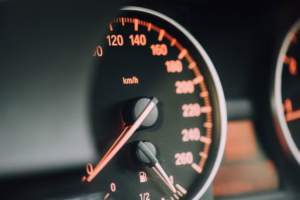
Aside from the cost of insurance, car remapping has a few drawbacks. The following are some of the downsides of remapping a car:
- Only turbo engines benefit from remapping. When remapping a non-turbo engine, there are substantial diminishing returns.
- Engine strain is much higher in remapped cars due to the increased speed, power, and performance of the engine.
- In a remapped automobile, speeding is significantly easy.
- A driver may occasionally need to purchase higher octane fuel, which is normally more expensive.
It’s up to you to decide whether remapping is worth it, just like car tuning. Most drivers, on the other hand, would be better off with a stock automobile.
Buy a safe, reliable used car today
One of the advantages of buying from onlineremap is that you can always rely on our network of dealers to deliver dependable, unmodified vehicles.