
ECO TUNING
How Long Does A Car’s ECU Last?
With so many computers in current cars, it might be tough to figure out what’s wrong if performance begins to suffer. What about the car’s ECU (electric control unit) for example? How long do you think it should last? We’ve already done the legwork so you don’t have to.
The main purpose of your car’s ECU (electronic control unit) is to monitor gas injection and provide the proper fuel balance to the air intake. The ignition timing of your car is controlled in large part by this equipment. Modules should last the life of the car, but without adequate maintenance, they can start to fail after 100,000 miles.
This is the primary control unit, however additional are being added to cars to control various aspects of the vehicle. We’ve looked at how the ECU works, as well as what to look for in a bad ECU. Continue reading to learn more!

What is the function of an ECU in a car?
The unit, also known as the engine control module (ECM), is a small component that can be found in two places on a vehicle. The first is behind the dash on the passenger’s side. The second is under the hood on the driver’s side.
An ECU’s job is to shift things around. The electric current is directed into actuators, which are subsequently in charge of moving the system’s components. In the ECU, there is a chip with software that has been programmed specifically for your vehicle.
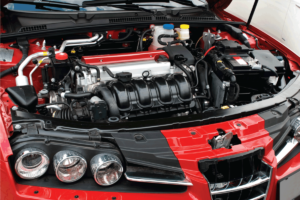
To function effectively, the chip connects with the other electrical elements. It’s even capable of forming a memory. Consider the driver seats in current vehicles, which have programmable seating positions. Something like this would be saved in one of the ECUs.
What are the signs of a bad ECU?
A malfunctioning ECU can be identified by a number of particular indications. One of the first things you’ll notice is the vehicle’s performance deteriorating. This can involve issues with fuel mileage and shifting.
Other indicators include:
- The check engine light appears and disappears.
- The car will not start.
- While shifting, jerk.
- It’s possible that the engine will shut down on its own.
- Rolling up and down windows takes longer.
Any of these issues should be resolved as quickly as feasible. Take a look at how you’ve been driving lately. Have you been sitting around doing nothing for a long time? Have you found yourself in a scenario where water damage is a possibility? Or suppose you required a jump start and it was connected with the wrong polarity.
Can you drive with a faulty ECU?
It is not suggested to drive a car with a malfunctioning ECU, although it is feasible to do so. The longer you drive with a failing ECU, the more problems you’ll have when it’s time to take it to the repair. If your engine stalls or turns off while driving or at a stoplight, you could be in a perilous position, based on the warning indications listed above.
Don’t be concerned! There are a number of techniques to avoid having a defective ECU.
You will be able to keep the ECU operating properly for years if you maintain the vehicle on a regular basis.
This covers things like:
- Oil changes.
- Brake pads have been replaced.
- Wheel bearings have been replaced.
- Having at least half a tank on hand at all times.
- Not exceeding the car’s capabilities.
- Fill up on fluids.
- Hire an expert to do the changes.
Keeping track of the work you do on your car allows you to go beyond the 100,000 mile mark and get closer to the vehicle’s lifespan. When it comes time to trade it in or resell it on your own, it will also benefit you.
How much does it cost to replace an ECU?
The price is determined by three factors: testing, reprogramming, and complete replacement. The ECU is difficult to diagnose since it controls so many aspects of the car. You’ll need the shop to do testing on the vehicle’s various systems. The exam itself can cost anything from $150 to $300. That pricing may or may not include labor.
They’ll repair and reprogram it once they’ve identified the problem and determined that it can be preserved. The reprogramming charge, in addition to the testing fee, runs from $300 to 750 dollars.
One of the reasons it could get costly is because newer automobiles have highly particular parts.
Finally, if the tests reveal that it cannot be rescued, you will require a complete replacement. This is a little less expensive than reprogramming it, but it’s still within the same price range. Expect to pay between $500 and $600. Obviously, you’ll need to include in diagnostic and labor costs.
Many stores factor the diagnosis into the final price, however this varies by store. You may be eligible for a warranty if you have a powertrain control module, which is an ECU that controls the engine and transmission. Check with your warranty company or the dealership where you purchased it to see whether it is covered.
How many ECUs can a car have?
It’s becoming more common for newer automobiles to contain a large number of ECUs. Instead of having so many tangling bits, companies are depending on computers to make cars work. A powertrain module, as previously said, can regulate numerous electrical components in the car and will keep the number below ten. However, don’t be astonished if your 2020 vehicle comes with 30-50 units.
Vehicles that are entirely electric or hybrid rely largely on the modules. To make your car work, you might have up to 80 components. Modules vary depending on the vehicle’s make and model, however the following are the most common:
- Suspension control is a term that refers to the ability to control the suspension
- Control of the transmission.
- Control of the brakes.
- Engine management.
- Control via telematics.
ECUs that control systems like windows, seats, automated trunks, automatic braking, parallel parking, and blind-spot alerts are common. It is really convenient to have these features looking out for your safety while driving; but, keep in mind that when it comes time to repair them, there is a cost.
Do old cars have ECUs?
ECUs first appeared on assembly lines in the early 1980s, with some appearing in the late 1970s. Due to the high cost of computers, Bosch began incorporating computer systems into a small number of its automobiles. GM, on the other hand, began installing ECUs in many of its vehicles in the 1980s.
Cars with ECUs have both advantages and disadvantages. Because they aren’t the key selling point for automobile makers, older vehicles without them may be more difficult to locate components for.
You’ll be visiting junkyards, which can be entertaining and gratifying in and of itself. Taking newer cars to a dealership rather than working on them yourself will be necessary. While you may have to wait longer and spend more, you can rest assured that your vehicle is being serviced by trained specialists.
To sum up
With good maintenance, an ECU should last the life of the car, or at least 100,000 miles. The electric control unit works with the engine’s currents to regulate fuel and air intake for optimal engine performance. Having the ECU worked on is expensive and time-consuming, so keep an eye on your brakes, fluids, and driving style to stay on the road for longer!