
Why can’t professional chip tuning be cheap?
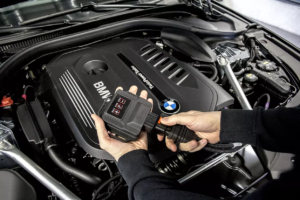
The auto-tune industry has grown into a full-fledged segment of the automotive industry, including powerbox systems and chip tuning installations (often wrongly spelled “chip tunning”). Modern engines, which are controlled by a computer (engine control unit, ECU), can be run through computerized diagnostics to achieve optimal performance. This means that personalized engine tuning (including eco-tuning for fuel economy) is no more an expensive whim available just from a few high-end specialized vehicle parlors, but also from garages and smaller businesses.
On various tuning forums, opinions on chip tuning are split; some say it is a great technique to improve the car’s performance and overall driving experience.
Others argue that the factory-built engine is unaffected by tuning, and that tuning kills the engine. A tuning forum can occasionally serve as a fantastic instance of how success has many fathers, while failure is an orphan. Commenting on other people’s problems and failures is usually more convenient than admitting one’s own poor or hasty decisions, which can frequently result in spectacular “bummers” that destroy the engine and cause you to lose hours simply because you tried to save a few bucks on tuning performed in the parking lot of a local supermarket. The truth, as always, lies somewhere in the middle. Chip tuning at a low cost can be beneficial, but a decent and expert chip tuning cannot be.
The cost of chip tuning includes more than just the time it takes to download the software. It’s just the last step in the process. It is required to work on the dyno in order to correctly write and prepare software, which can be time-consuming. Personalized tuning necessitates the use of appropriate sensors and measuring devices (AFR, the composition of the mixed measurement; EGT, measuring the exhaust gas temperature in the exhaust manifold, executed with a sensor or pyrometrically; the smoke sensor, etc.). Furthermore, proper workshop gearing comes at a cost and is subject to normal wear and tear. Naturally, a chassis dyno is required. Aside from that, you’ll need cooling systems and controls for the dynamometer’s working conditions in order to replicate the results.
Regardless of these expenditures, a tuner requires programming tools in order to execute expert, car-specific chip tuning. A chip editor, software, and an EVC application The next step is to use an OBD flasher or a programmer to install new firmware to the ECU through a diagnostic connection.
Again, you can utilize cheap Chinese clones, which can sometimes block the engine driver and cause lasting car damage, necessitating a large cost to repair or replace the ECU. A professional tuner employs original tools that are upgraded and fitted to the latest drivers on a regular basis.
Even if we consider the installation of powerboxes (also known as “chip box tuning”), it is difficult to believe that installing such a powerbox anywhere at a petrol station and utilizing default settings is the best approach. Tuning with eBid is great because it is inexpensive, but it otherwise offers nothing but uncertainty and a lack of professionalism.
Because it is not just the expense of the software, the chip tuning or powerbox system prices start at above 1000 AUD. It also includes the expense of acquiring the necessary knowledge, professional equipment, and software, as well as the time spent on the dyno tuning individual chips.